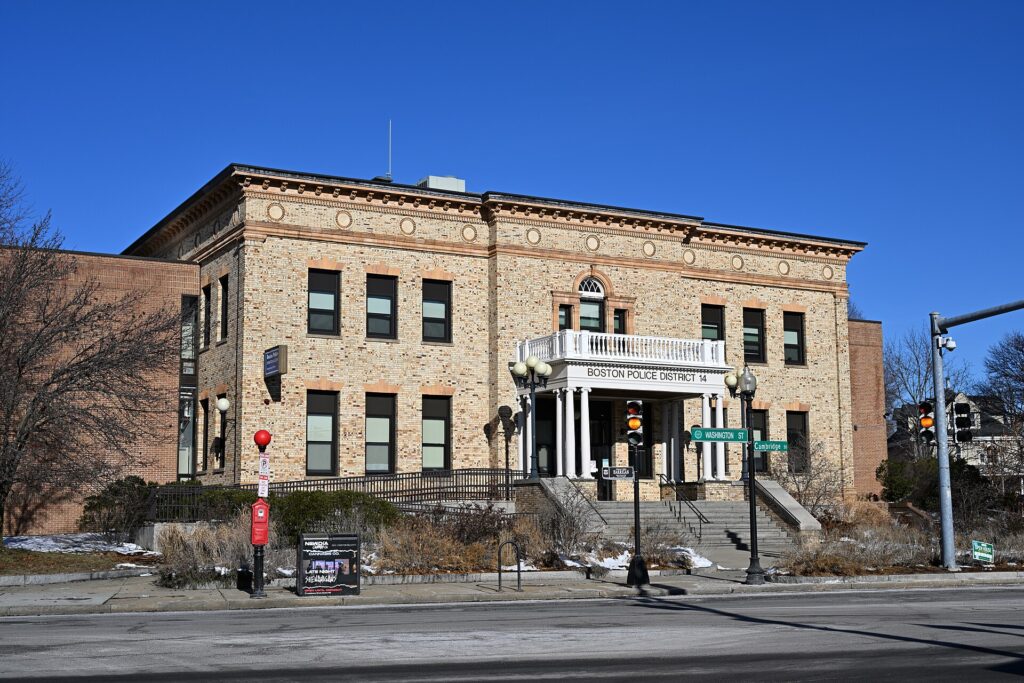
The headlines feel worse.
The numbers are more mixed.
Over the past few weeks, Boston-area residents have seen stories about shootings, stabbings and other violent incidents.
Then on Oct. 1, Cambridge police said a man allegedly sexually assaulted multiple people inside a women’s locker room at a Porter Square gym. He was arrested and charged, and the case is still pending.
When several serious incidents hit the news within days of each other, it can feel like something suddenly changed.
So we checked the broader data.
Is violent crime actually rising in Boston?
Not across the board.
The latest Boston Police Department citywide report compares Jan. 1 through Sept. 27, 2026 with the same period last year.
Homicides fell from 25 to 23.
Reported rape and attempted rape offenses dropped from 131 to 111.
Robbery and attempted robbery declined from 571 to 553.
One category is moving the other way: aggravated assault.
Domestic aggravated assaults increased from 673 to 694, while non-domestic aggravated assaults rose from 1,195 to 1,230.
Put those five violent-crime categories together and Boston is essentially flat compared with last year: 2,611 incidents versus 2,595, an increase of about 0.6%.
The combined total is still roughly 3% below the five-year average for the same point in the year.
So there is an increase worth watching in aggravated assaults.
There is not, however, an across-the-board surge in violent crime.
What about shootings?
This is where recent headlines can create an especially strong impression.
Boston had 70 shooting incidents through Sept. 27, compared with 82 during the same period last year.
That is a decline of about 15%.
The number of shooting victims is essentially unchanged from 2025 and remains roughly 22% below the five-year average in BPD’s latest reporting.
That means there have been fewer separate shooting incidents, even though the number of people shot has remained around last year’s level.
Property crime is also slightly lower year over year.
BPD recorded 12,312 Part One property crimes, compared with 12,446 during the same period last year, a decline of about 1%.
That total is still roughly 3% above the five-year average, another reminder that different parts of the crime picture are moving in different directions.
Cambridge tells a similar story
The Porter Square case happened in Cambridge, which has its own police department and should not be mixed into Boston’s numbers.
Cambridge Police reported 2,116 serious crimes through August 2026, down from 2,366 during the same period in 2025.
That is an 11% decrease, and the total was also slightly below Cambridge’s five-year average.
Those figures only run through Aug. 31, so they do not include the Oct. 1 Porter Square case.
A serious incident can happen even while broader citywide crime totals are declining.
Both things can be true at the same time.
So why can Boston feel less safe right now?
Timing matters.
When several serious incidents happen close together, people encounter them one after another through local news, Reddit, neighborhood groups, TikTok, Instagram and other feeds.
A handful of major cases can quickly start to feel like one larger trend.
Crime statistics look at a much wider period.
And right now, that wider picture is considerably more mixed than the recent headlines might suggest.
There are also limits to the numbers.
Police statistics measure incidents that are reported and coded by departments, and BPD labels its current figures preliminary. Numbers can change as cases are reviewed or reclassified.
The bottom line
Boston has areas of concern in 2026, particularly the increase in aggravated assaults.
But the latest data does not show a broad citywide increase across every major violent-crime category BPD tracks.
Homicides are down.
Reported rape and attempted rape are down.
Robbery is down.
Shooting incidents are down.
Property crime is slightly down year over year.
Aggravated assault is up.
So if Boston feels unusually unsafe right now, the recent concentration of serious headlines may help explain why.
The numbers, at least so far, tell a more complicated story.
Boston data covers Jan. 1 through Sept. 27, 2026. Cambridge data covers Jan. 1 through Aug. 31, 2026. BPD figures are preliminary and may change.