Boston is not usually framed as a music-industry capital in the same way as Los Angeles, New York or Nashville.
But spend a few nights actually going out here and that comparison starts to matter a lot less.
Boston has a music scene.
It is just spread across a lot of different rooms.
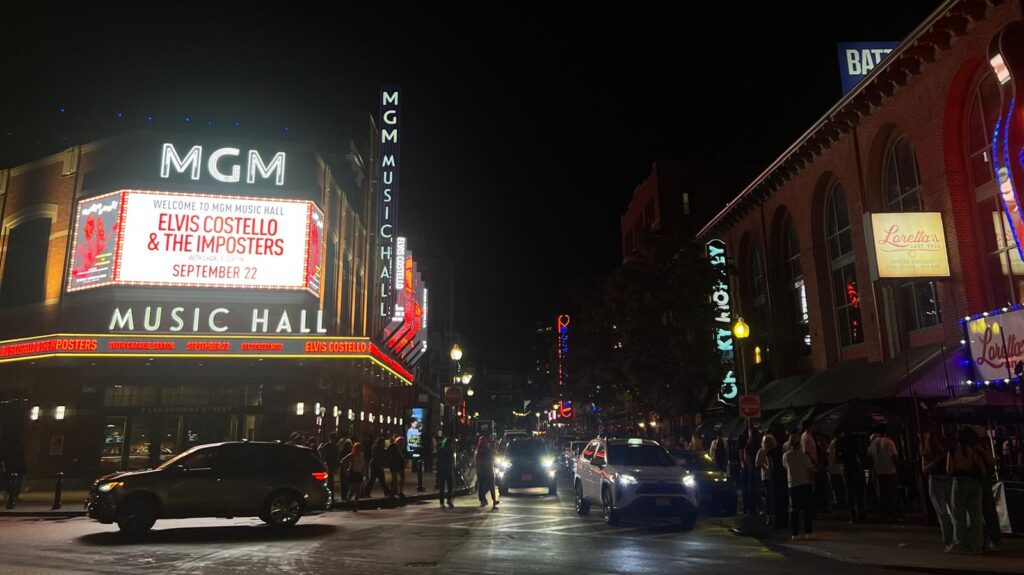
On one night, thousands of people can pack into a major show around Fenway. A few stops away, an indie band can fill the Paradise or The Sinclair.
Somewhere in Somerville, Cambridge, Medford or Allston, another crowd is watching a local act in a room small enough to stand a few feet from the stage.
That range is part of what makes the scene interesting.
This fall alone, Greater Boston’s smaller venues have calendars packed with touring artists and local acts across indie, punk, rock, electronic, jazz and plenty in between.
Paradise Rock Club, Brighton Music Hall, Royale, The Sinclair, Crystal Ballroom, Deep Cuts and other rooms keep live music moving across Greater Boston through most weeks.
And the local side of the scene is active too.
WBUR has spent 2026 documenting new music from artists across Greater Boston and New England, including Haasan Barclay, SeeFour and dozens of other local or locally connected acts.
There are also scenes inside the scene.
In Brookline, POSTunderground has built a small basement jazz scene that mixes longtime players with younger musicians and student performers.
Somerville’s NICE, a fest was created partly in response to the idea that Boston and New England “don’t have a music scene,” eventually growing into a multi-day festival centered around local bands and artists.
Then there is Berklee.
Berklee College of Music alone currently enrolls more than 4,200 students, constantly bringing new performers, producers, composers and collaborators into the city.
That connection was especially visible this weekend when Berklee held its first Homecoming Block Party next to Fenway Park, bringing Susan Tedeschi, Tiwa Savage, Fabiola Méndez, Dogs in a Pile and Dreion onto one outdoor stage.
Boston’s music scene also works across very different scales.
You can see a major touring artist one night and end up watching a local act with a tiny online following in a crowded club the next.
That is probably the better way to understand music here.
Boston does not need to become LA.
There are already enough venues, musicians, students, tiny rooms, packed stages and late nights happening across the city to give Boston its own music identity.
You just have to show up.