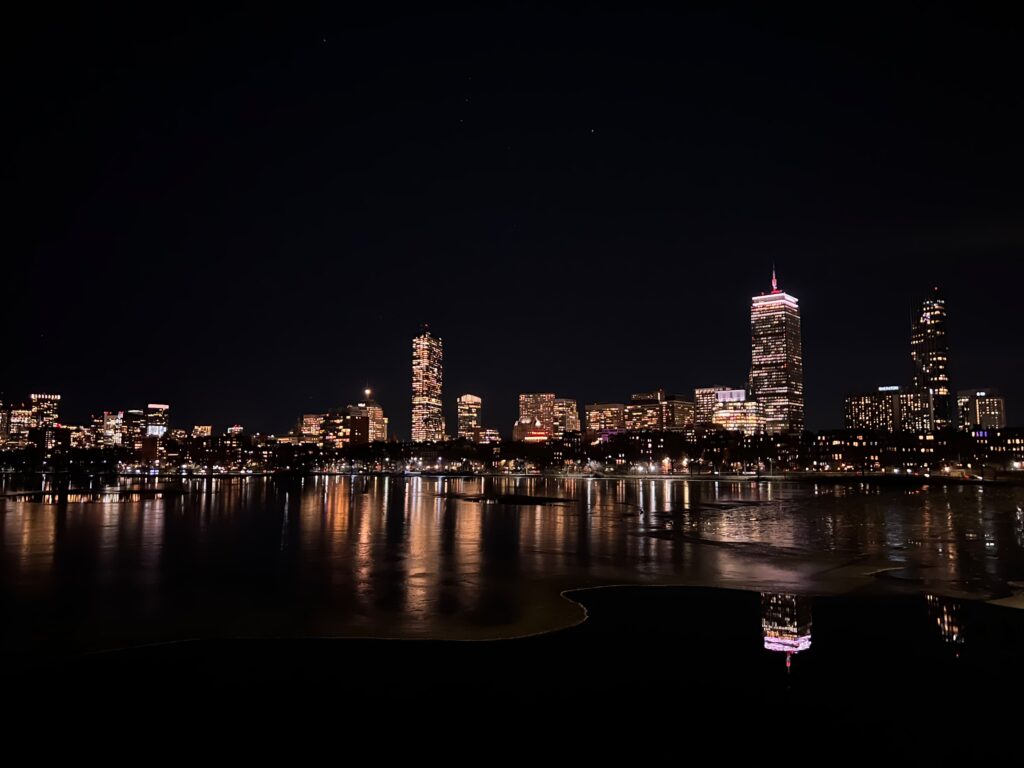
The Greater Boston area refers to Boston and the surrounding cities and towns that make up the wider metropolitan region. While there is no single universally agreed-upon boundary, it generally includes communities within several miles of downtown Boston, as well as nearby suburbs and neighboring cities.
Boston proper consists of 23 official neighborhoods, including Back Bay, Beacon Hill, Fenway, the North End, Jamaica Plain, Dorchester, Roxbury and South Boston.
The Inner Suburbs include neighboring cities and towns that are closely connected to Boston, such as Cambridge, Somerville, Brookline, Chelsea, Everett, Revere, Medford, Malden and Quincy.
The Outer Suburbs extend farther into the surrounding region and include communities such as Newton, Waltham, Watertown, Belmont, Arlington, Lexington, Wellesley, Needham, Framingham and Dedham.
The broader metropolitan area can also encompass parts of the North Shore, South Shore and MetroWest regions, including communities such as Salem, Peabody, Weymouth, Braintree, Natick and Marlborough.
The term Greater Boston is often used interchangeably with the Boston metropolitan area, although its precise boundaries depend on the context. For example, the U.S. Census Bureau’s Boston-Cambridge-Newton metropolitan statistical area covers a much larger geographic region, including parts of southern New Hampshire.
In short: Greater Boston includes Boston itself, its neighboring cities and towns, and a wider network of surrounding communities connected through commuting, education, employment and public transportation.