
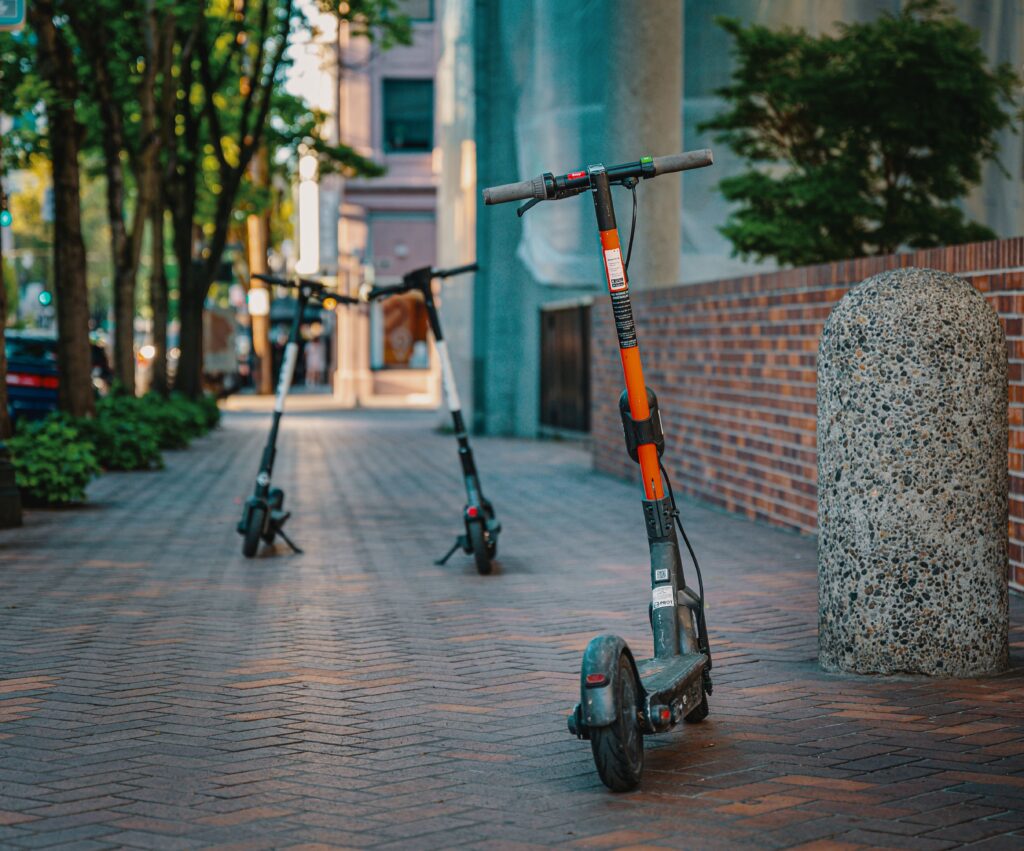
A stand-up electric scooter may look like a simple way to get to the T, but Massachusetts law does not automatically treat it like an electric bicycle. Depending on how the device is classified, riders may need a driver’s license or learner’s permit and may face restrictions on where and when they can ride.
That matters whether you own a scooter or use a shared rental service. Here’s what Massachusetts law says and what Boston-area riders should know before heading out.
First, what kind of scooter do you have?
Massachusetts law separates motorized scooters from electric bicycles, motorized bicycles and other vehicles.
Under Massachusetts General Laws, Chapter 90, Section 1, a motorized scooter is generally a two-wheel or three-wheel device with handlebars, designed to be stood or sat on, and powered by an electric or gas motor. The definition excludes motorcycles, electric bicycles, motorized bicycles and certain mobility devices.
That description appears broad enough to cover many familiar stand-up electric kick scooters, including the general style used by rental services such as Lime. However, the classification of a specific model should not be assumed without confirmation from the appropriate state authority.
A scooter’s advertised wattage alone does not settle the question. Its design and how it operates also matter.
Do you need a driver’s license?
Massachusetts law requires a valid driver’s license or learner’s permit to operate a vehicle classified as a motorized scooter on a public way.
That requirement appears in Chapter 90, Section 1E. The law does not create a separate scooter-only license.
The important distinction is that the requirement applies to vehicles legally classified as motorized scooters. Electric bicycles are a separate category and have different rules.
For riders using shared rental scooters, including Lime-style models, the state’s definition appears relevant. However, the classification of a specific rental model should be confirmed rather than treated as definitively settled.
Where can you ride?
Massachusetts law allows motorized scooters on public ways, with restrictions. They cannot be operated on limited-access or express state highways where signs prohibit scooters or bicycles. Riders must follow applicable traffic rules and keep to the right side of the road.
In Boston, motorized scooters are prohibited on sidewalks, except when necessary to enter or leave adjacent property. The city’s Traffic Rules and Regulations also include motorized scooters in the definition of vehicles permitted in marked bicycle lanes, subject to posted restrictions and other traffic rules.
Don’t assume the same local rules apply everywhere around Boston. Cambridge, Somerville, Brookline, Newton, Quincy and Braintree may have their own traffic regulations or restrictions for particular facilities.
Also, permission to ride on a public street does not automatically mean a scooter is allowed on every park path, trail or shared-use path. Check the rules for the specific route before riding.
Helmets, speed and riding after dark
Section 1E sets out several requirements for motorized-scooter riders:
- License or learner’s permit: Required to operate on a public way.
- Maximum speed: Riders cannot exceed 20 mph.
- Helmet: Protective headgear meeting the registrar’s standards is required.
- Passengers: Carrying another person is prohibited.
- Night riding: Operation on a public way is prohibited after sunset and before sunrise.
- Road position: Riders must keep to the right side of the road.
- Equipment: The law requires operational stop and turn signals so riders can keep both hands on the handlebars.
These requirements are important when choosing a scooter, too. A model being sold online or available through a rental service does not automatically mean it meets every requirement for use on Massachusetts public ways.
Are the rules changing?
Massachusetts has been considering changes to its micromobility rules.
In January 2026, the state’s Special Commission on Micromobility submitted a report examining how bicycles, e-bikes, motorized bicycles and scooters are regulated. The report discussed gaps in existing definitions and the need for a clearer framework.
On May 4, 2026, Gov. Maura Healey filed the Ride Safe Act, known as S.3077, proposing changes to the way micromobility devices are classified and regulated.
The bill was referred to a study order on July 22, 2026. It has not been enacted, so riders should follow the requirements already in effect rather than treating proposed changes as current law.
Before you take your scooter out
Check your scooter’s specifications and make sure you understand which legal category it falls into. If it is classified as a motorized scooter, the licensing, helmet, speed, equipment and operating restrictions in Massachusetts law apply.
If you use a shared rental scooter, don’t assume that its availability through an app means every legal requirement has been settled. When in doubt, check with the Massachusetts Registry of Motor Vehicles before riding on public ways.
Official sources:
- Massachusetts General Laws, Chapter 90, Section 1: Definitions
- Massachusetts General Laws, Chapter 90, Section 1E: Motorized scooters
- Special Commission on Micromobility report, January 2026
- Ride Safe Act, S.3077: Legislative history
- Boston Traffic Rules and Regulations
This guide is for general information, not legal advice. Rules can depend on the vehicle’s classification and the municipality or facility where you ride. If you are unsure how your scooter is classified, check with the Massachusetts RMV or a qualified Massachusetts attorney.
