Boston’s food scene has plenty to offer beyond the takeout orders you already know. From Yunnan rice dishes to Uyghur hand-pulled noodles, Yemeni lamb and Cambodian soups, these four food traditions offer a different way to explore the region — and you don’t need to know the menu by heart to get started.
Here’s where to try them and what to look for on your first visit.
1. Yunnan: Try rice cakes, mushrooms and regional noodles
Yunnan, in southwestern China, has a varied food culture shaped by its geography and many local communities. Look beyond the broad label of Chinese food for ingredients such as fresh herbs, mushrooms, pickled vegetables and distinctive rice preparations.
Start at Yunnan Kitchen, at 1721 Washington St. in Boston’s South End. Its menu includes Dali fried mushrooms ($12) and stir-fried rice cake ($17), made with pickled mustard greens, pork, egg and tomato. The rice cake is a good first order if you want something more substantial; the mushrooms make an interesting starter to share.
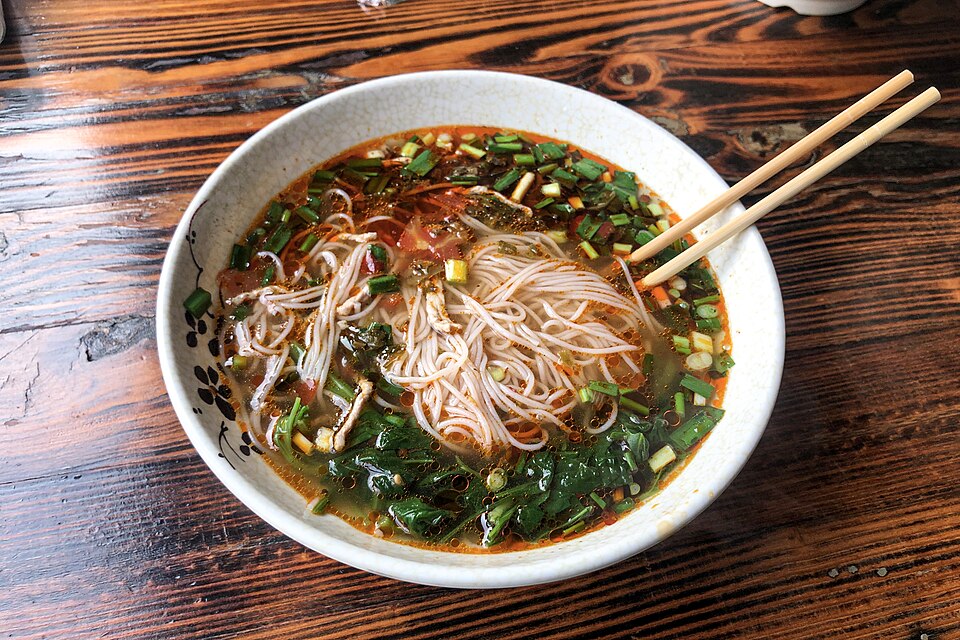
For a more noodle-focused meal, Wei’s Yunnan Rice Noodles at 412 Market St. in Brighton is another option. It specializes in Yunnan-style rice noodles, including small-pot preparations.
2. Uyghur: Start with hand-pulled noodles
Uyghur cuisine comes from the Uyghur people of Xinjiang in northwest China, with strong culinary connections across Central Asia. Hand-pulled noodles, lamb, cumin and hearty rice dishes are useful starting points.
At Silk Road Uyghur Cuisine, 645 Cambridge St. in Cambridge, try the laghman ($16.99), hand-pulled noodles served with stir-fried vegetables and beef. Other approachable choices include Uyghur pilaf ($16.99), made with rice, carrots, onion and beef, or lamb kebabs ($13.99).
If you’re new to the cuisine, laghman is a particularly good first order: it gives you a taste of the restaurant’s noodle-making tradition in a filling main dish.
3. Yemeni: Explore slow-cooked lamb and rice
Yemeni cooking has a range of regional dishes, including slow-cooked meats, fragrant rice and stews served with bread. At Bab Al-Yemen, 468 Commonwealth Ave. in Boston, the menu offers several ways to explore those traditions.
Lamb mandi is slow-cooked lamb served over basmati rice. Haneeth is another slow-cooked lamb preparation, seasoned with Yemeni spices and served with rice. For something different, try fahsah: a hot shredded-lamb stew served with fresh bread.
If you’re unsure where to begin, mandi is a straightforward introduction; fahsah is worth considering if you’d rather try a stew and bread. The restaurant’s online food menu lists these dishes but does not display prices, so check the current menu before visiting.
4. Cambodian: Try Khmer soups and beef lok lak
Cambodian cuisine, also known as Khmer cuisine, often brings together fresh herbs, sour and savory flavors, rice and noodle dishes.
Thmor Da Restaurant, at 144 Shirley Ave. in Revere, is a place to start. Its menu includes beef lok lak, served with rice and lemon-pepper dipping sauce, for about $19, as well as Cambodian noodle soups and rice porridge. A bowl of soup is a good choice if you want something comforting; beef lok lak is a more substantial first meal.
For a Boston option, The Elephant Walk, at 1415 Washington St. in the South End, serves Cambodian–French food. Its Cambodian dishes include rouleaux (Cambodian spring rolls), nataing (ground pork simmered in coconut milk) and kuy tieu, a Khmer noodle soup. Starters are listed around $12, with the noodle soup around $9.
Pick one dish and start there
You don’t need to know every regional specialty before walking into a restaurant. Choose one dish that sounds good, ask the staff what they recommend for a first visit and build from there. A bowl of noodles, a plate of rice or a soup can be an easy introduction to a food tradition you haven’t tried before.