Boston has plenty of restaurants that visitors find because they’re close to the Freedom Trail, the waterfront, Newbury Street or other major attractions.
That doesn’t automatically make them bad restaurants. It does mean you’re sometimes paying for more than what’s on the plate.
So when a restaurant is expensive and heavily visited by tourists, what are you actually paying for?
We looked at three well-known Boston restaurants using the same test: published menu prices, location, atmosphere, history or experience, and what diners say about the value.
Menu prices and restaurant details were checked against published restaurant information on October 7, 2026. Prices may change, so check the restaurants’ current menus before visiting.
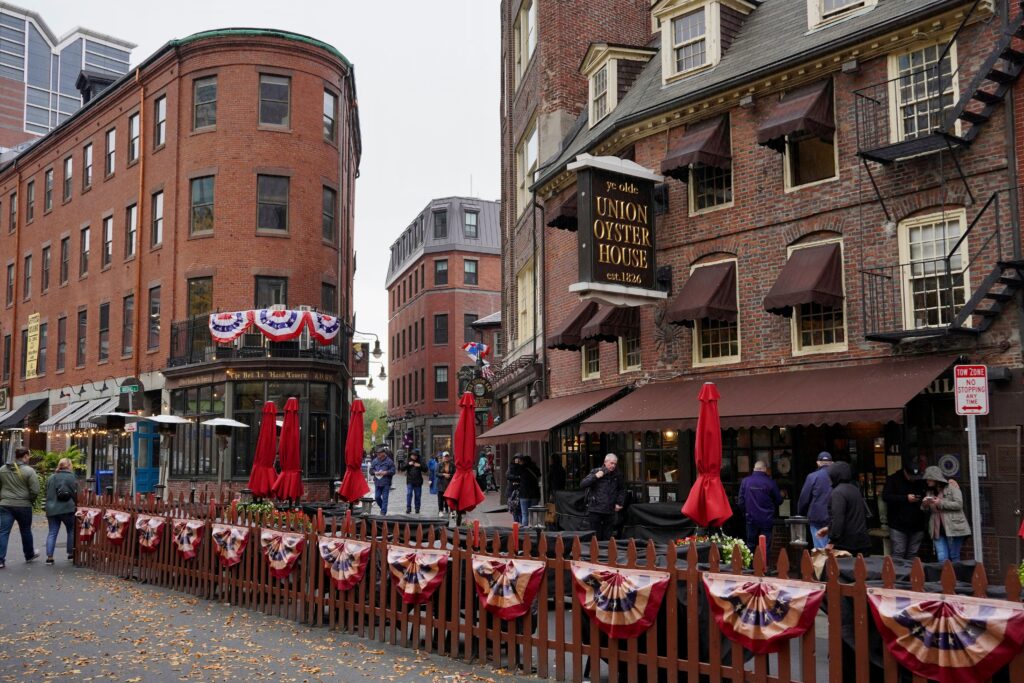
Union Oyster House: You’re paying for the history, too
41 Union St.
Union Oyster House is one of the clearest examples of a restaurant where the experience is part of the product. It’s on the Freedom Trail near Faneuil Hall, in a historic brick building that National Park Service research dates to approximately 1716–1717. The building predates the restaurant, which opened in 1826.
The National Park Service recognizes Union Oyster House as the oldest continuously operated restaurant in the United States.
The published lunch menu lists grilled salmon at $29.95, fried oysters at $29.95, fish and chips at $24.95 and a seafood platter at $37.95. Two $29.95 entrées plus a bowl of chowder would come to about $74 before tax and tip, or roughly $94 with Boston’s 7% meals tax and a 20% tip.
The value here isn’t just the food. You’re also paying for a historic Boston setting and an experience tied directly to the city’s history.
Worth it if: the history and atmosphere are part of why you’re going.
Less compelling if: you’re judging it strictly against Boston’s best seafood for the money.
Legal Sea Foods: Location can be part of the meal
Long Wharf: 255 State St.
Legal Sea Foods is a different case. It’s an established Boston seafood brand, but its Long Wharf location also puts you directly beside major visitor attractions, including the waterfront, Faneuil Hall and the New England Aquarium.
The published Long Wharf menu lists fish and chips at $30, salmon at $35 and a half-pound lobster roll at $53. A bowl of clam chowder is $12. Two fish-and-chips entrées plus chowder would come to about $72 before tax and tip, or roughly $92 all-in using the same tax-and-tip assumptions. Two half-pound lobster rolls plus chowder would come to about $118 before tax and tip, or roughly $150 all-in.
The value calculation is partly about convenience and setting. If you’re already spending the day around Boston’s waterfront, paying more for a recognizable seafood restaurant in the middle of the sightseeing zone may make more sense than traveling elsewhere for a cheaper meal.
Worth it if: you want recognizable New England seafood in a convenient visitor location.
Less compelling if: you don’t care about the location or the Boston seafood experience.
The Capital Grille: Expensive, but the experience is the point
900 Boylston St.
The Capital Grille is a useful counterexample because its appeal isn’t primarily about being near a tourist attraction. It’s a traditional upscale steakhouse in Back Bay, with dry-aged steaks, an extensive wine program and formal service. The restaurant also offers private dining and other special-occasion services.
The Boston location is at 900 Boylston St., near the Hynes Convention Center. Verified OpenTable diners rate the restaurant highly for food, service and atmosphere, with value scoring lower than those categories.
That makes the value proposition different from Union Oyster House or Legal Sea Foods: you’re paying for a polished steakhouse experience rather than simply proximity to a landmark.
Worth it if: you specifically want upscale steakhouse service and atmosphere and have the budget.
Less compelling if: you’re simply looking for a good meal and don’t care about the formal experience.
So, are Boston’s tourist-heavy restaurants worth it?
Sometimes.
The better question isn’t whether a restaurant has tourists. It’s whether the thing you’re paying extra for matters to you.
At Union Oyster House, that may be history. At Legal Sea Foods, it can be location and the Boston seafood experience. At The Capital Grille, it’s the service, steakhouse atmosphere and overall dining experience.
If you want the cheapest great meal in Boston, none of these needs to be your first stop.
But if you’re visiting Boston and want dinner that also feels like part of the trip, the premium can make more sense — as long as you know what you’re paying for.